

The Cycle Series (Part II): Menstruation & The Follicular Phase — Your Body’s Monthly Reset

In Part I of The Cycle Series, we explored the four phases of the menstrual cycle and why your cycle is one of the most important reflections of your overall health.
Now, I want to slow things down and begin right at the start: Day 1.
Because contrary to what many of us were taught, your period isn’t just bleeding. It’s not “bad blood,” a detox, or your body malfunctioning every month. Menstruation is a highly coordinated hormonal, neurological, and inflammatory process — one that involves communication between the brain, ovaries, immune system, thyroid, adrenal glands, liver, gut, and uterus.
And understanding what’s actually happening during this phase can completely change the way you view your body.
Day 1: The Beginning of a New Cycle
Day 1 of your cycle is the first day of full menstrual bleeding.
If pregnancy hasn’t occurred during the previous cycle, the body recognises that the uterine lining is no longer needed. As a result, estrogen and progesterone levels begin to fall sharply.
This hormonal drop signals the uterus to shed its lining — the endometrium — which leaves the body as menstrual blood.
But the process starts long before the uterus itself.
The Brain–Ovary Connection
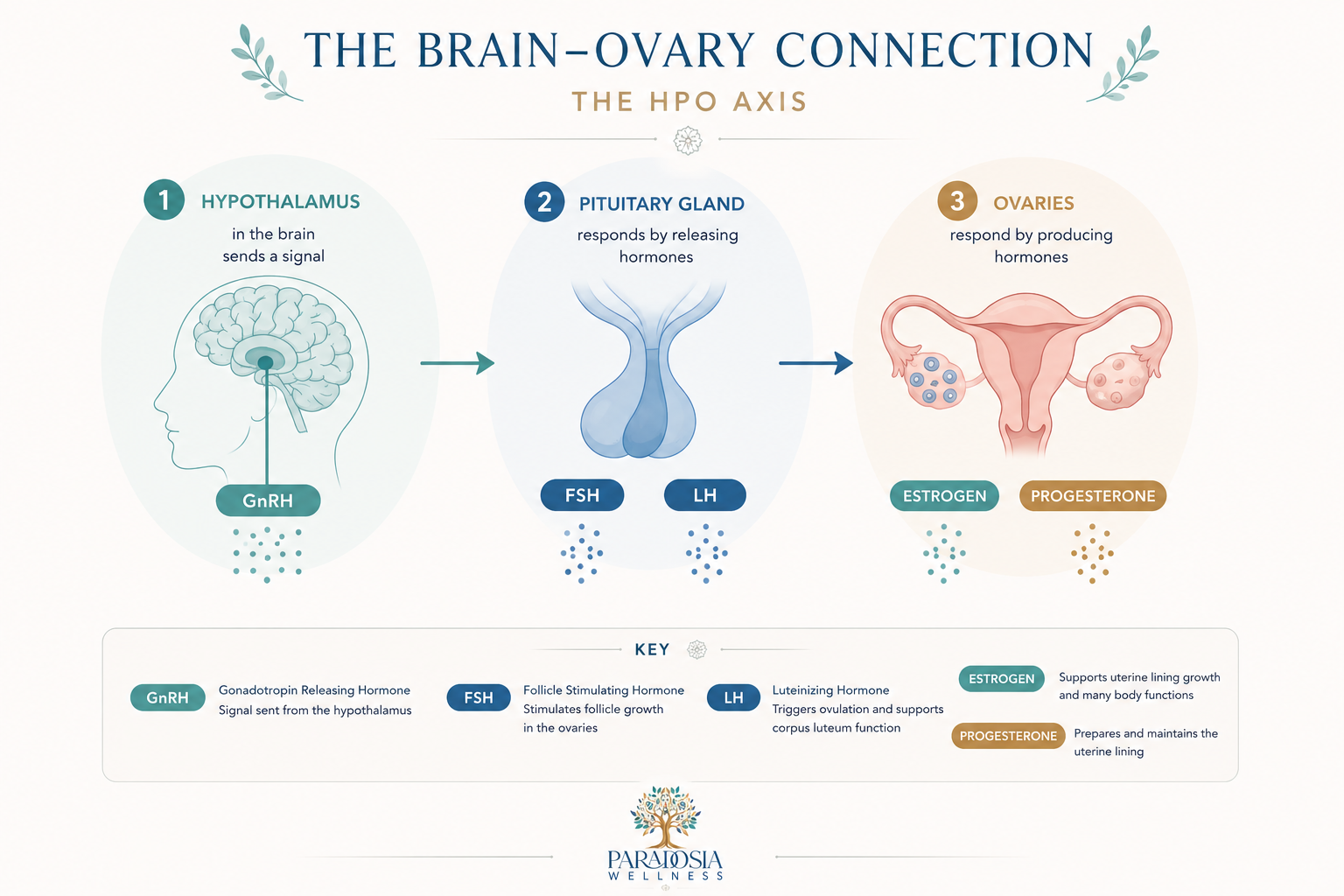
Your cycle is constantly being directed by communication between the brain and ovaries through what’s called the hypothalamic–pituitary–ovarian axis (HPO axis).
Here’s the simplified version:
The hypothalamus in the brain sends a signal (GnRH).
The pituitary gland responds by releasing hormones like FSH and LH.
The ovaries respond by producing estrogen and progesterone.
This is why stress, under-eating, over-exercising, poor sleep, trauma, nutrient deficiencies, or thyroid dysfunction can all impact your cycle. The brain always prioritises survival over reproduction.
Your hormones don’t work in isolation — your cycle is listening to your whole life.
This is something I wish more women were taught.
Your cycle is not separate from your stress levels. Or your sleep. Or your relationship with food. Or your nervous system. Or your emotional wellbeing.
Everything is connected.
What’s Happening During Menstruation?
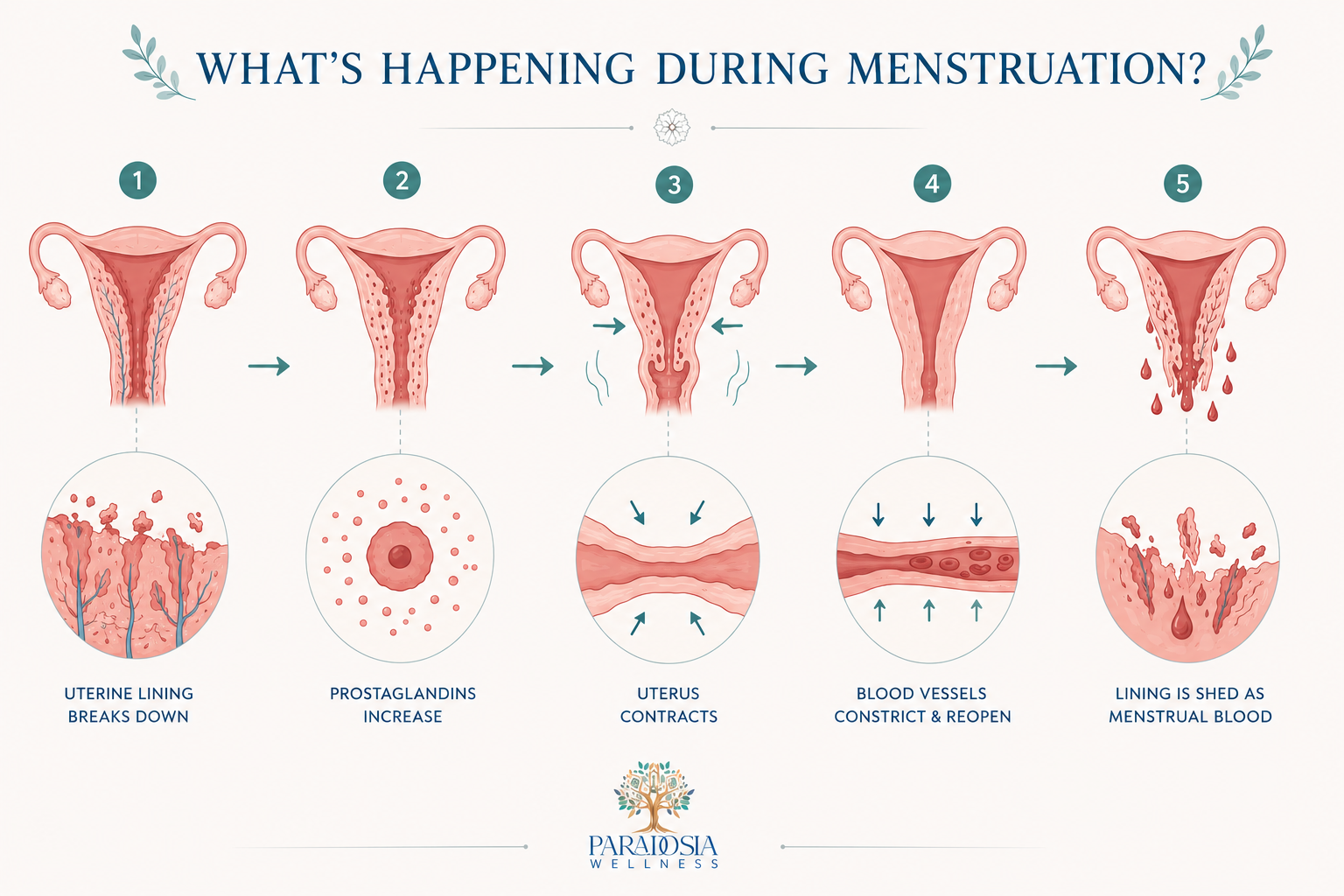
As estrogen and progesterone fall:
The uterine lining begins to break down.
Inflammatory compounds called prostaglandins increase.
The uterus contracts to help shed the lining.
Blood vessels temporarily constrict and reopen.
Menstrual blood and tissue leave the body.
This is also why some women experience:
cramps,
fatigue,
headaches,
digestive changes,
loose stools,
lower back pain,
nausea,
migraines,
or increased emotional sensitivity during their bleed.
A small amount of inflammation during menstruation is normal — it’s part of the shedding process. But debilitating pain, vomiting, fainting, extremely heavy bleeding, or symptoms that stop you from functioning are not something you should simply “put up with.”
Pain is information.
Why You May Feel More Sensitive During Your Bleed
As estrogen and progesterone fall, neurotransmitters in the brain are affected too — particularly serotonin, dopamine, and GABA, which influence mood, calmness, motivation, emotional resilience, and stress tolerance.
This is one reason many women notice they feel:
more inward,
emotionally sensitive,
less social,
more reflective,
more easily overstimulated,
or simply more tired during menstruation
Your body is directing energy toward shedding, repair, immune activity, inflammation regulation, and restoration.
In many traditional cultures, menstruation was seen as a time for slowing down, nourishing, reflecting, and conserving energy — not pushing harder.
This doesn’t mean women are weak during this phase. It means the body simply has different priorities.
And honestly? Modern life isn’t very accommodating to that reality.
Why Period Pain Happens
One of the biggest misconceptions I see is women being told severe pain is “just part of being a woman.”
While mild discomfort can happen, severe pain often points toward deeper imbalances that deserve investigation.
Excess prostaglandins can cause stronger uterine contractions and reduced blood flow to the uterus, increasing pain and inflammation.
From a naturopathic perspective, we also look at:
chronic inflammation,
endometriosis,
adenomyosis,
fibroids,
estrogen excess,
gut and liver dysfunction affecting hormone clearance,
blood sugar instability,
nervous system dysregulation,
stress physiology,
nutrient deficiencies (especially magnesium and iron),
and inflammatory dietary patterns.
Painful periods are never “all in your head,” and they’re rarely random.
Research continues to show that nutrients such as magnesium and omega-3 fatty acids may help modulate inflammatory pathways involved in period pain, while herbs like ginger have demonstrated benefits in some studies for reducing menstrual discomfort.
This is where root cause medicine matters.
Because true support goes far beyond simply masking symptoms — it’s about understanding why the body is struggling in the first place.
The Follicular Phase Begins
Even while you’re bleeding, your body is already preparing for the next cycle.
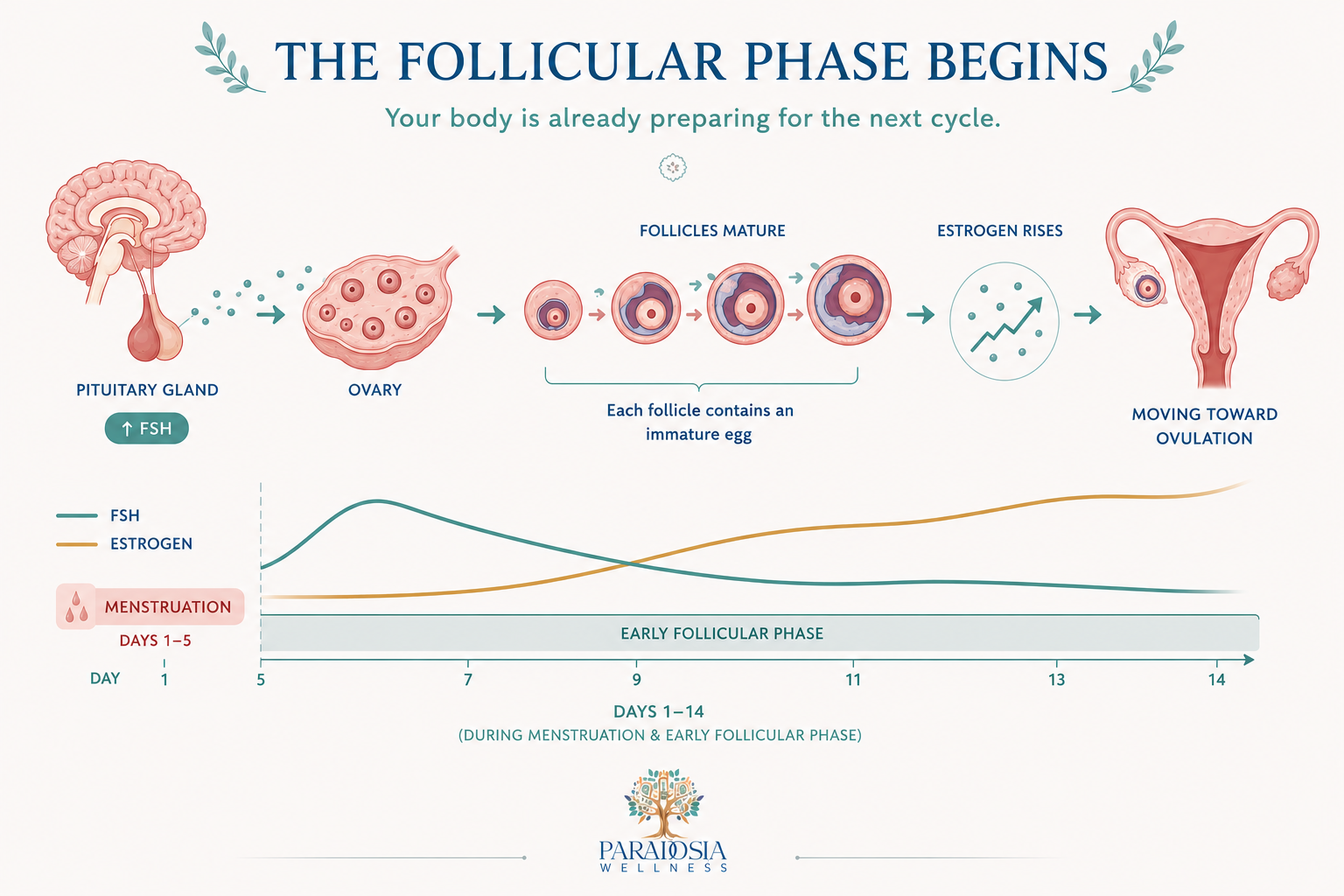
During the menstrual and early follicular phase, the pituitary gland increases production of FSH (follicle-stimulating hormone).
FSH stimulates a group of ovarian follicles to begin maturing. Each follicle contains an immature egg.
As these follicles grow, estrogen gradually begins rising again.
And this is where many women begin noticing a shift.
Estrogen doesn’t just influence reproduction — it also impacts the brain, nervous system, metabolism, skin, and energy production.
As estrogen rises, many women notice:
clearer thinking,
lighter mood,
improved motivation,
more energy,
better stress resilience,
improved exercise tolerance,
increased sociability,
stronger libido,
and a greater sense of momentum.
This is partly because estrogen can positively influence neurotransmitters like serotonin and dopamine, while also supporting insulin sensitivity, circulation, and cellular energy production.
Biologically, the body is moving toward ovulation.
Supporting Your Body During This Phase
Rather than forcing yourself to “push through,” this phase is often a time to focus on replenishment, nourishment, and supporting the body’s natural rhythm.
Some foundations I focus on in clinic include:
Replenishment & Nourishment
Menstruation is not just blood loss — it’s a metabolically and nutritionally demanding process.
Your body is simultaneously:
shedding tissue,
regulating inflammation,
repairing the uterine lining,
losing minerals,
shifting hormones,
and preparing for the next cycle.
This is one reason many women naturally crave warming, grounding, or comforting foods during this phase.
In clinic, I often focus on:
iron-rich foods,
magnesium,
zinc,
protein,
B vitamins,
omega-3 fats,
mineral-rich broths,
slow-cooked meals and stews,
warming soups,
eggs,
leafy greens,
lentils,
olive oil,
quality red meat where appropriate,
and blood-sugar-stabilising meals.
Food truly becomes information for the body here.
Nervous System Support
Stress directly affects the HPO axis.
This is why poor sleep, chronic stress, overtraining, emotional burnout, trauma, or under-eating can alter ovulation, hormone production, and cycle regularity.
I say this to patients all the time:
Rest is productive.
The nervous system plays a far bigger role in hormonal health than many people realise.
Anti-Inflammatory Support
Reducing inflammatory load can make a significant difference for many women with painful periods.
Some evidence-based supports include:
omega-3 fats,
magnesium,
curcumin,
ginger,
adequate protein intake,
reducing ultra-processed foods,
stabilising blood sugar,
and supporting gut and liver health for healthy estrogen metabolism.
This is where naturopathy shines — looking at the whole ecosystem rather than isolating one symptom.
Movement
Gentle movement often works better than intense exercise during menstruation:
walking,
stretching,
yoga,
mobility work,
swimming,
Pilates,
or simply slowing down more than usual.
Your body isn’t weak during this phase — it’s simply working differently.
Sev’s Final Thoughts
I think one of the most healing things a woman can do is stop fighting her cycle and start understanding it. Your period is not an inconvenience or a punishment. It’s communication.
When your cycle is painful, absent, irregular, excessively heavy, emotionally debilitating, or exhausting, your body is not betraying you — it’s asking you to pay attention.
The more I practice as a naturopath, the more I see how deeply connected women’s hormones are to stress, nourishment, sleep, trauma, gut health, thyroid function, mineral status, inflammation, and nervous system regulation.
Nothing in the body happens in isolation.
And perhaps most importantly — women deserve better education around their bodies than “period pain is normal” or “just go on the pill.” Because understanding your cycle changes the relationship you have with yourself.
Next in the series, we’ll move into ovulation — what actually happens during this phase, why it matters far beyond fertility, and why ovulation is one of the most important signs of female health.
Sev xx
