

Plant Milks: Not the Healthier Choice You Think
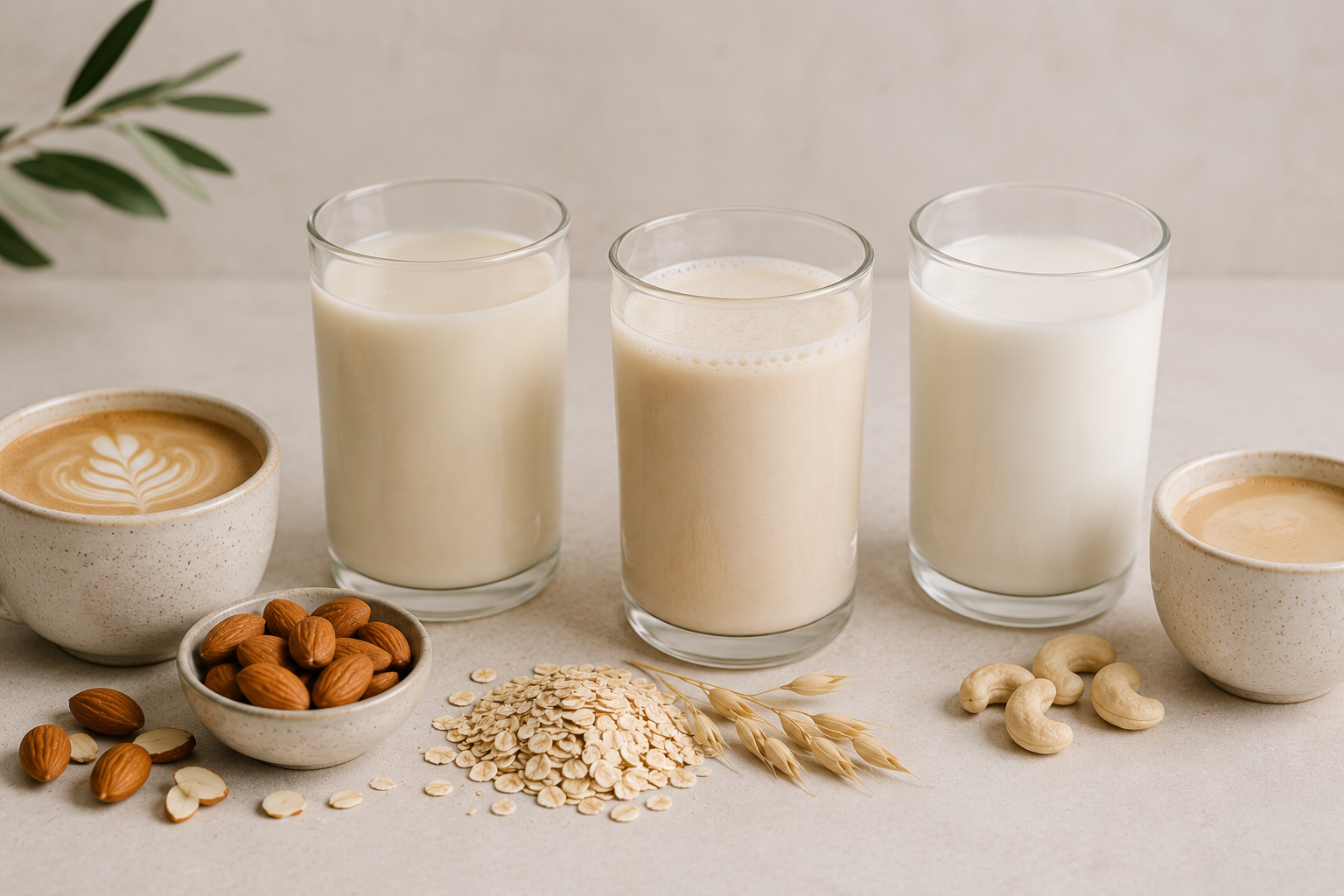
Walk into almost any café today and you’ll see it: oat lattes, almond flat whites, pistachio drinks, “dairy-free” everything.
Plant-based milks — or more accurately, plant-based drinks — have become one of the biggest wellness trends of the modern era. In many parts of the world, terms like “milk” are legally protected for dairy products, which is why many brands have shifted toward labels like oat drink or almond beverage instead.
And honestly? I think this has opened up an important conversation.
Because somewhere along the way, many people began assuming these products were nutritionally superior to traditional dairy — when in reality, most commercial plant milks are highly processed industrial foods with very different nutritional profiles.
That doesn’t automatically make them “bad.” But it does mean we should stop viewing all plant milks as interchangeable with real milk.
What’s Actually in Oat Milk?
At first glance, oats sound wholesome. And whole oats can absolutely be part of a healthy diet.
But oat milk is not the same thing as eating traditional oats.
Most commercial oat milks are made by:
blending oats with water,
breaking down the starches enzymatically,
straining the fibre,
then adding oils, gums, stabilisers, emulsifiers, flavourings, and fortification blends to improve texture and shelf life.
The end result is often a product that:
contains very little protein,
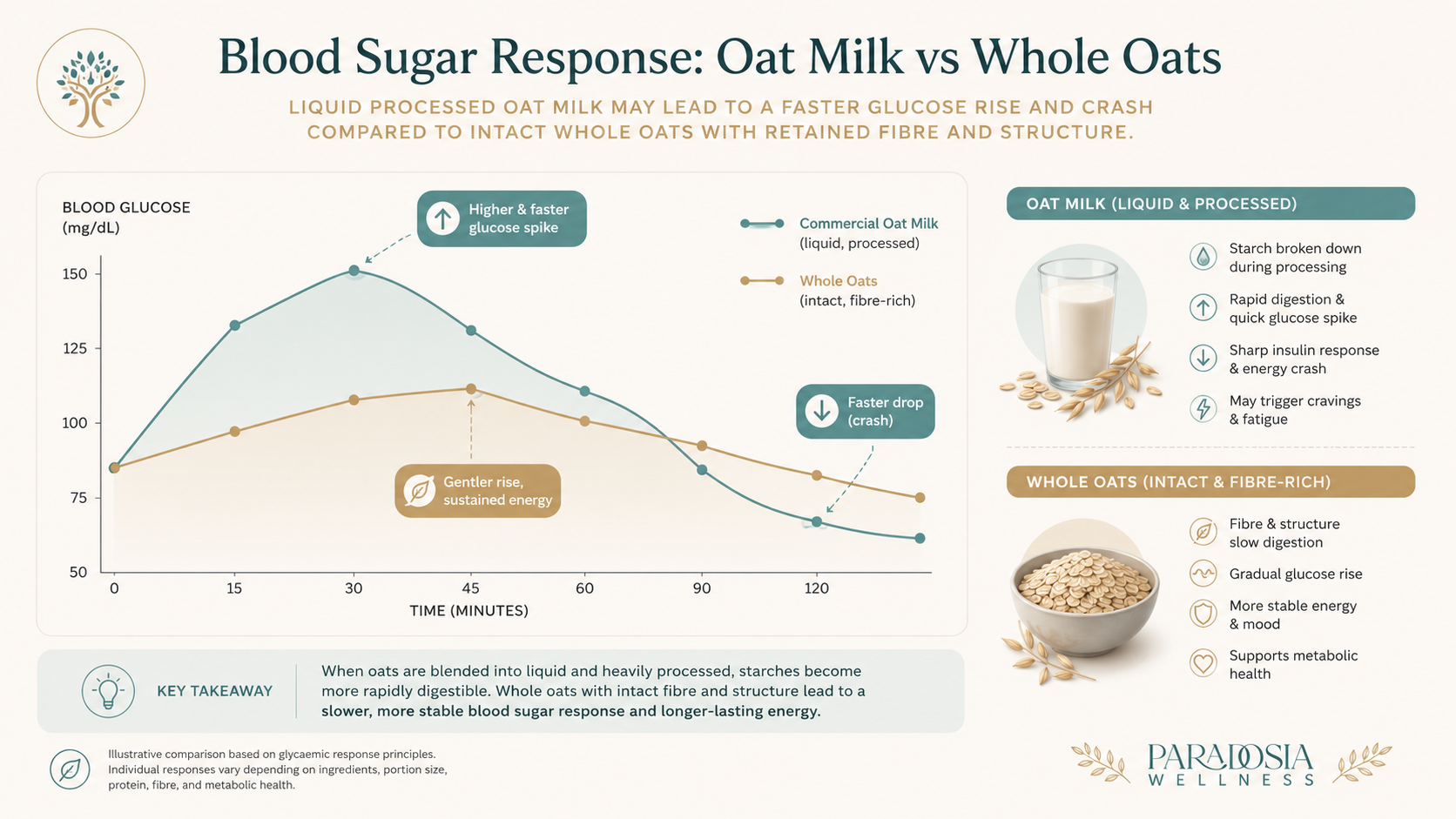
can spike blood sugar more rapidly than intact oats,
lacks the fibre of whole oats,
and relies heavily on processing to mimic the creaminess of dairy.
Some oat milks also contain added vegetable oils such as canola or sunflower oil, which many people are now trying to reduce due to concerns around oxidation, ultra-processing, and inflammatory dietary patterns.
Another thing worth mentioning is that conventionally grown oats can contain pesticide residues, particularly when crops are chemically treated before harvest in some agricultural systems. This doesn’t mean every oat product is “toxic,” but it does raise important conversations around cumulative toxic load, gut health, and long-term exposure to ultra-processed agricultural chemicals.
Emerging research continues exploring how certain pesticides may influence the gut microbiome, intestinal permeability, inflammatory pathways, and metabolic health.
This is one reason I generally encourage choosing organic oats where possible — especially for people already struggling with gut issues, inflammatory conditions, hormone imbalances, autoimmune presentations, or high overall toxic burden.
Context matters.
Whole organic oats eaten traditionally are very different from highly processed commercial oat beverages loaded with additives and oils.
That creamy café oat latte?
Nutritionally, it’s often closer to a sugary soft drink than a protein-rich whole food.
The Blood Sugar Conversation
This is the part many people are never told.
When oats are blended into liquid form and processed, their starches become rapidly digestible. This can lead to a sharper glucose response compared to eating traditional whole oats, especially when fibre and protein are minimal.
For some people — particularly those with:
insulin resistance,
PCOS (recently renamed PMOS - Polyendocrine Metabolic Ovarian Syndrome — a post on this soon!),
fatigue,
blood sugar dysregulation,
metabolic syndrome,
or inflammatory conditions —
This constant rise-and-crash blood sugar pattern can become problematic over time.
If we’ve ever had this conversation in person, I’ve been known to jokingly sing that oat milk is “diabetes in a bottle” to the tune of Genie in a Bottle by Christina Aguilera 😂
Obviously, that’s tongue-in-cheek — but the reason I joke about it is because many people genuinely believe oat milk is automatically a “health food,” when for some bodies, the metabolic response can look very different.
Something being “plant-based” does not automatically mean that it’s lower glycaemic, less processed, hormone-friendly, or metabolically supportive.
Almond Milk: Mostly Water, Very Little Almond
Almond milk often carries a strong “clean health” image — but many commercial versions contain surprisingly small amounts of actual almonds.
Some contain as little as 2–5% almonds, with the rest being:
water,
gums,
stabilisers,
emulsifiers,
oils,
flavours,
and synthetic fortification blends.
Nutritionally, many are very low in protein, naturally occurring calcium, iodine, B12, and essential fats. So, unless fortified, they contribute very little nutritionally.
And while homemade almond milk can absolutely be beautiful, fresh, and nutrient-rich, the supermarket versions are often more comparable to flavoured processed beverages than traditional whole foods.
Why Dairy Has Nourished Humans for Generations
This conversation isn’t about fear-mongering plant foods.
It’s about understanding nutrient density.
For people who tolerate dairy well, quality milk has traditionally provided:
complete protein,
calcium and phosphorus,
iodine,
vitamin B12,
naturally occurring fats,
bioavailable nutrients for growth, hormones, fertility, bone health, and brain function.
And unlike many modern plant beverages, these nutrients occur naturally — not because they were added back in synthetically after processing.
From a naturopathic perspective, I think this distinction matters.
Particularly for:
children,
pregnant women,
postpartum mothers,
elderly individuals,
athletes,
and people already struggling with nutrient depletion.
I also think quality matters enormously here. There’s a big difference between highly processed flavoured dairy desserts and sugary milk drinks, and high-quality dairy from well-raised animals.
Traditionally prepared, organic, grass-fed, fermented, or minimally processed dairy products are very different nutritionally from ultra-processed modern convenience foods.
Again, context matters.
Are We Intolerant — Or Is the Gut Struggling?
This is something I see often in clinic.
Many people remove dairy after experiencing symptoms like:
bloating,
urgency,
diarrhoea,
cramping,
mucus,
reflux,
or digestive discomfort.
And sometimes avoiding dairy genuinely helps.
But sometimes the bigger question is:
Why is the digestive system struggling to tolerate it in the first place?
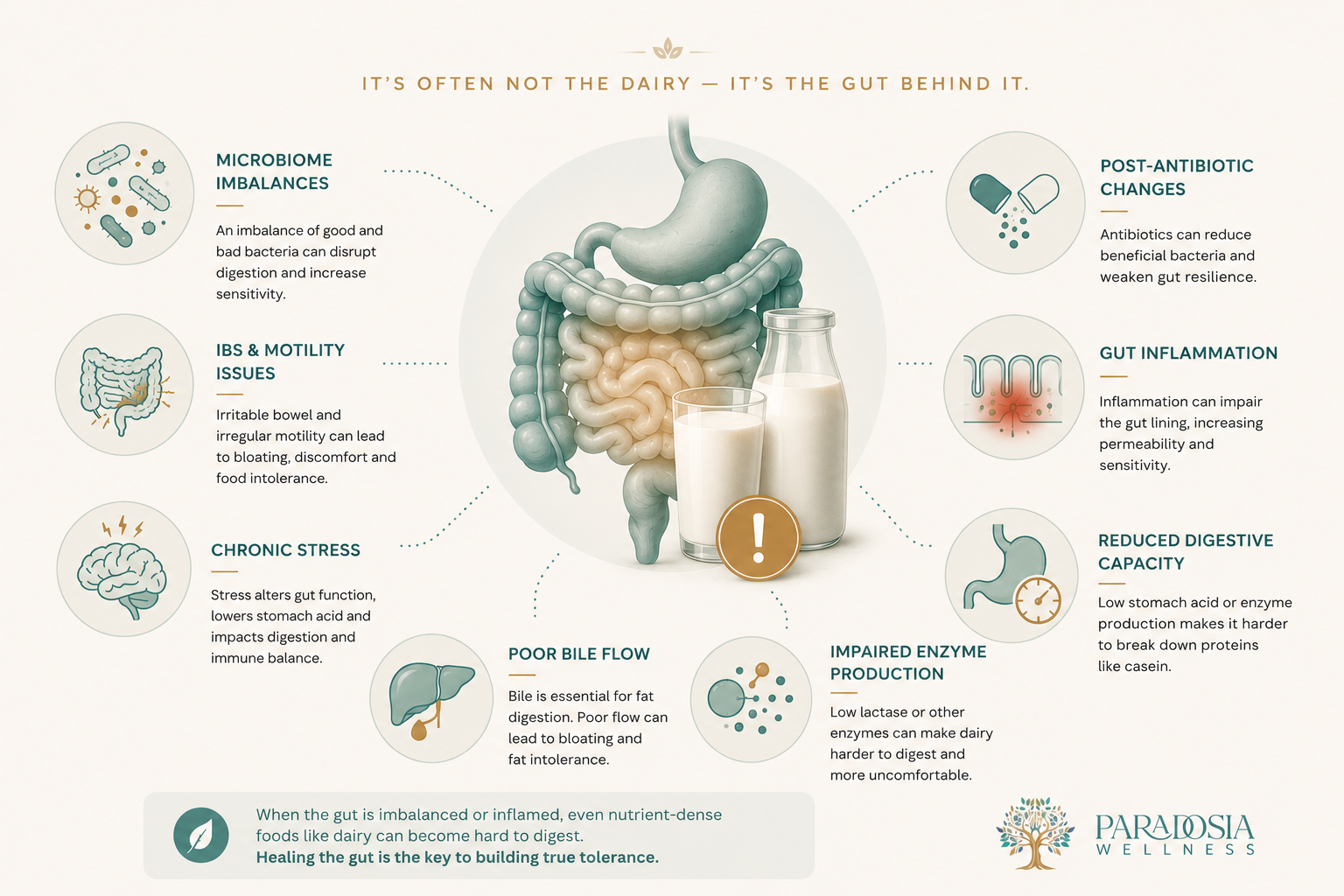
Because not every reaction automatically means that you have a true allergy, permanent intolerance, or that the food itself is inherently “bad.” In some cases, the issue may be broader gut dysfunction such as:
microbiome imbalances,
IBS,
chronic stress,
post-antibiotic changes,
gut inflammation,
reduced digestive capacity,
poor bile flow,
or impaired enzyme production.
This matters because the gut lining, microbiome, nervous system, digestive enzymes, and inflammatory state all influence how we tolerate foods.
I’ve seen many patients remove multiple food groups believing they were “intolerant,” only to later reintroduce those foods successfully after focusing on gut healing, nervous system regulation, reducing inflammation, improving sleep, restoring digestive function, and rebuilding overall resilience.
Of course, true dairy allergies and genuine lactose intolerance absolutely exist — and they should be taken seriously. But I also think modern wellness culture sometimes encourages people to fear foods before understanding what their body is actually trying to communicate.
And from a naturopathic perspective, that distinction matters.
But What About Dairy Intolerance?
Of course, dairy is not suitable for everyone.
Some people genuinely feel better avoiding it due to lactose intolerance, milk protein sensitivities, allergies, and digestive conditions.
And that’s okay too.
But there’s a huge difference between intentionally choosing a plant beverage that works for your body, and believing it’s automatically healthier because marketing says so.
Those are two very different conversations.
A More Nourishing Middle Ground
I think we’ve lost some nuance in modern nutrition.
Health is rarely about extremes.
Not everybody needs to drink dairy.
Not everybody needs to avoid dairy either.
What matters most is:
food quality,
nutrient density,
ingredient transparency,
metabolic health,
gut health,
and how your body actually responds.
If choosing plant milks:
read ingredient labels,
prioritise simpler formulations,
look for adequate protein,
avoid excessive gums and vegetable oils where possible,
and remember that these products are not nutritionally identical to milk simply because they’re poured into coffee the same way.
Traditional foods have nourished humans for generations for a reason.
And sometimes the healthiest choice is not the trendiest one — it’s the least processed one.
Sev’s Final Thoughts
One thing I always encourage patients to do is look beyond the marketing.
Modern wellness culture is full of products wearing a “health halo” — but labels like natural, plant-based, dairy-free, or low-fat don’t automatically tell us whether something is nourishing, balanced, or supportive long term.
Food should do more than just avoid harm.
It should deeply nourish the body.
And in a world increasingly built around ultra-processed convenience foods disguised as health products, I think returning to simpler, more traditional, nutrient-dense foods is one of the most powerful things we can do.
Because sometimes progress isn’t about reinventing nutrition.
It’s about remembering what sustained humans in the first place.
Sev xx
